



BRAZIL VOLCAFE TRIP 2026
There’s only so much you can learn about coffee from behind a cupping table. To really understand what goes into a coffee, you need to see where it starts, the farms, the people, the landscapes, the processing and everything that happens long before the green beans arrive at the roastery. Recently, Alysha, our Head of Education & Training and Ads, our Roaster, travelled to Brazil with Volcafe Coffee to experience that journey first-hand. Over the course of the trip, they visited farms and producers including Fazenda Sete Cachoeiras with Renato Brito, Fazenda do Salto with Otavio Reis, Cooco Minas Co-op, a Volcafe mill, Sitio Mateir with Godoy, Fazenda Anta with Mr Hugo and Antonio Pereira’s family farm. They saw coffee being produced on a range of scales, from highly mechanised estates to smaller family farms, tasted coffees straight from the tree and spent time with the people behind them. We asked them what surprised them, what challenged their expectations and what they brought home with them.
Before you even cupped a coffee, what was your first impression of Brazil and how did the reality compare to what you expected?
Alysha: It definitely exceeded my expectations. Seeing the sheer scale of the operation gave me a whole new appreciation for the amount of work, planning and people involved in producing coffee at origin. It was a real reminder that every cup starts with an incredible amount of effort long before it reaches the roastery or cafe.
Ads: Nothing quite prepares you for the scale of Brazil. Before I'd even cupped a single coffee, it was the landscape that hit me, the sheer vastness of the country under a brilliant blue sky. I arrived in the middle of their winter, which threw me a little: hot, strong sun during the day, but short days, with mornings and evenings dropping to around 15–20°C. Just a little cool, but still genuinely pleasant, a version of winter I wasn't quite expecting.

You visited farms of all sizes, from larger estates with Volcafe to the micro farms working with Legender Coffee. What differences stood out most in the way coffee was grown, processed and cared for?
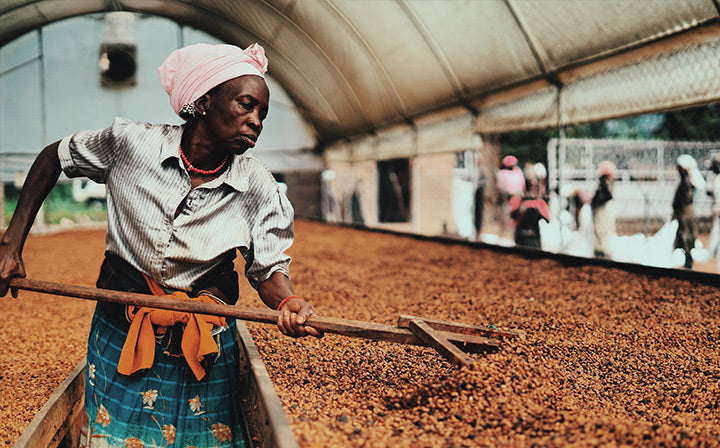
Alysha: Visiting both the larger estates with Volcafe and the micro farms working with Legender Coffee was a real highlight and I honestly wouldn't say one experience was better than the other, they were just completely different. The larger farms were incredible to see because of their scale, with impressive facilities, machinery and well-organised processing. It really showed how technology and efficiency can work alongside producing great coffee. The micro farms, on the other hand, felt much more personal. We were welcomed into people's homes, met their families, which made the whole experience feel incredibly genuine and reminded me that coffee is so much more than just a product. It's people's lives, their livelihoods and something they're deeply proud of. It was also fascinating to see the contrast in how the coffee was produced. Watching coffee being hand-picked and processed on a much smaller scale before comparing it to the larger, more mechanised operations gave me a much broader appreciation of the different ways exceptional coffee can be grown and cared for. Despite the differences in size, what really stood out was the passion and dedication everyone had for producing the best coffee possible.
Ads: The contrast was amazing. The larger estates were way ahead on technology, mechanised harvesting, more advanced processing but they're struggling to find workers. To attract labour, they're now offering perks like paid transport and lunch just to get people on-site. The smaller farms were the opposite: everything handpicked, whole families out working the land together. It really showed two very different models of how coffee gets from tree to bag in the same country. But whatever the size of the farm, the same passion and love for coffee ran through everyone we met. It had been a good season and it showed everyone seemed genuinely happy.

What did you see, hear, smell and experience that people back home would never expect?
Alysha: One of the biggest surprises was how different coffee production smells, sounds and feels compared to what people might expect. Some farms genuinely smelled like a working farm because of the fermenting coffee cherries, while others had the smoky aroma of wood fires used to gently dry the coffee. The larger mills were much louder than I imagined, with machinery constantly moving coffee through each stage of processing. What impressed me most, though, was the level of organisation and traceability. Every lot was carefully recorded and could be tracked throughout its journey, showing just how much care and precision goes into every coffee long before it reaches the roastery or café.
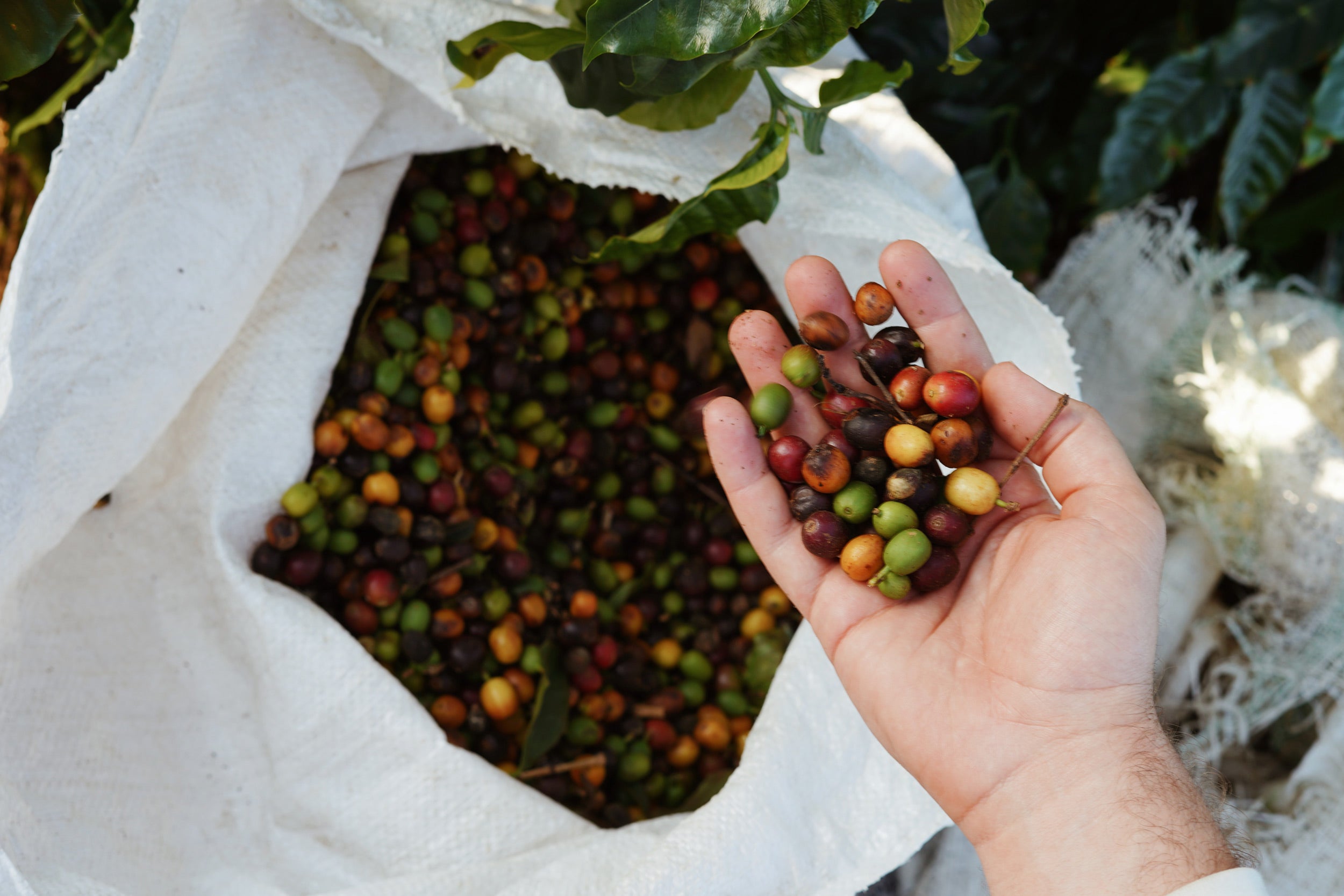
Ads: There's a very specific smell out in the fields, picking and tasting the cherries straight off the tree, so sweet, nothing like what you'd expect from a "coffee" smell. Then at the mills it flips completely: that classic dusty coffee smell, but so much stronger than anything you'd get back home. And everywhere we went, we were offered pão de queijo, little Brazilian cheese bread rolls, a real Minas Gerais speciality. It became a running theme of the trip, alongside the coffee itself.

Brazil is often associated with classic chocolate and nut flavour profiles, but what coffees surprised you the most? Were there any varieties, processing methods or flavour notes that completely challenged your expectations?
Alysha: Going into the trip, I had a good idea of what to expect from Brazilian coffees. They're often known for their chocolate, nut and caramel sweetness, balanced acidity and full body and we tasted plenty of coffees that showcased those classic characteristics. The coffee that really stood out to me, though, was from Fazenda Anta with Mr Hugo. It still had that unmistakable Brazilian sweetness and body, but it was accompanied by a vibrant, juicy acidity that really elevated the cup. It was a great reminder that while Brazil has a recognisable flavour profile, there's so much diversity within the origin, and producers like Mr Hugo are creating coffees that can really challenge your expectations.
Ads: We tried a range of coffees, mostly from the area we were visiting, but the one that really stood out was at Fazenda Anta, Mr Hugo's farm, a Yellow Bourbon that turned out to be the juiciest, cleanest cup of the whole trip. It completely stuck with me and it's exactly the kind of coffee that challenges what people usually expect from Brazil. At Volcafe, it was a different kind of experience, cupping many coffees side by side across different quality grades, which was fascinating for really understanding how much that grading scale actually translates into the cup.
How did the season influence what you experienced? What role did the time of year play in the trip?
Alysha: The timing of our visit actually became a big talking point throughout the trip. Due to later-than-usual rainfall, some farms had to delay harvesting by a couple of weeks, which showed just how much the weather dictates every decision a producer makes. Heavy rain can also cause ripe coffee cherries to fall from the tree before they're harvested. Those cherries then have to be collected separately from the ground, which is another time-consuming process and can have an impact on quality. It really highlighted how unpredictable coffee farming can be and how producers are constantly adapting to the conditions each season brings. Seeing this first-hand gave me a much greater appreciation for just how much of coffee production is influenced by nature. No matter how experienced the producer or how advanced the equipment, the weather will always have the final say.
Ads: We got lucky with the timing. There'd been rain just before we arrived, which delayed the harvest, otherwise we might have missed it altogether. It made for an interesting contrast between farms: at Fazenda Sete Cachoeiras, run by Renato Brito, they were ahead with their advanced technology and had already finished harvesting. But at Fazenda Anta, some fields hadn't started picking yet. Seeing both stages side by side, within days of each other, gave a real sense of how much timing and technology affect a harvest.

The people behind the coffee are just as important as the coffee itself. Was there a particular producer, farmer or conversation that has stayed with you and why?
Alysha: Honestly, I couldn't pick just one. Every producer and farmer we met welcomed us with incredible warmth and generosity. We were a big group, the largest many of them had ever hosted but they made every one of us feel at home. We were always greeted with fresh coffee, water and of course, plenty of pão de queijo (Brazil's famous little cheese bread), which quickly became a favourite. What stayed with me most wasn't one particular conversation, but the passion each producer had for their coffee. You could see how much pride they took in what they do and how much it meant to them that people from the other side of the world had come to learn about their work. It was a real reminder that behind every bag of coffee are people, families and generations of knowledge and that's something I'll take with me long after the trip.
Ads: One thing that really stayed with me was a fear I heard from more than one farmer, the worry that their children won't want to take over the farm. You could feel how deeply personal that was; these aren't just businesses, they're family legacies, sometimes generations deep. But I also saw the flip side of that. Renato, at Fazenda Sete Cachoeiras, spoke proudly about his daughter finishing her agriculture degree, ready to join her brother running the farm together. And at Fazenda Anta, I saw it in action, the farmer's kids, still too young to work, already out on the land growing up around it, with the hope that they'll carry it on when they're older. It was a genuinely hopeful moment, proof that the next generation can want this too.

What did you learn about the challenges and opportunities facing Brazilian coffee producers today? Whether it was climate, labour, sustainability or economics, what gave you a new perspective?
Alysha: One of the biggest takeaways for me was that producing great coffee isn't just about growing coffee, it's about supporting the people who grow it. We met several fourth and fifth-generation farming families who have dedicated their lives to coffee. While some of the next generation are choosing different careers in the cities, it highlighted just how important it is to make coffee farming a sustainable and rewarding profession for the future. Rather than seeing it as a negative, it showed me why investing in producers today is so important. I was also really impressed by the work Volcafe does alongside farmers. They don't just offer advice based on research and data, they focus on building genuine relationships and trust. By working together over time, they can help farmers improve quality, productivity and sustainability in ways that are practical and long-lasting. It reinforced something I've always believed: the best coffee comes from strong partnerships, not just great farming.
Ads: The three biggest things that stood out were weather, market and labour. Weather is the one thing nobody can control, every season, farmers are simply hoping it brings the best harvest possible. We were lucky to catch a good one this year and you could feel it in how happy everyone was. On the market side, prices are something everyone watches closely, with buying and selling decisions shaped around it, it's a constant, live consideration for producers. And then there's labour, which we saw play out directly, bigger farms struggling to attract workers and having to offer perks like transport and lunch, while smaller family farms rely on working the land together generation to generation.
Alysha: Without a doubt, it was the hospitality. Everywhere we went, people welcomed us with such warmth and generosity, but one experience will stay with me forever. We visited a small community centre serving around 500 people, where many of the locals had rarely met people from outside their own community. A few of the farmers hadn't even met each other before that day. Around six or seven local women had prepared a meal for all of us and the excitement and pride they had in sharing it with us was something really special. One of the organisers said that our visit would "echo" through the community for months after we had left. That word has stayed with me ever since. I think this trip will echo for the rest of my life. It reminded me that coffee has an incredible way of bringing people together, creating connections that go far beyond what's in the cup. Alongside that, I was struck by the resilience of the farmers. Whatever nature threw at them, their mindset was always to adapt, overcome and keep moving forward. That optimism, combined with their generosity, is something I'll carry with me long after returning home.
Ads: Beyond the coffee, it was the hospitality that left the biggest impression on me. Brazilians are so generous and kind, it didn't matter where we were, from the simplest people out in the rural areas to the buzz of a big city like São Paulo, everyone made us feel genuinely welcome. You could also feel the Portuguese influence running through the culture, in the language, the food and the architecture. It gave the whole trip a real warmth that went far beyond just the coffee itself.

Beyond coffee, what part of Brazilian culture left the biggest impression on you? It could be the food, hospitality, pace of life, traditions or something completely unexpected.
Alysha: Without a doubt, it was the hospitality. Everywhere we went, people welcomed us with such warmth and generosity, but one experience will stay with me forever. We visited a small community centre serving around 500 people, where many of the locals had rarely met people from outside their own community. A few of the farmers hadn't even met each other before that day. Around six or seven local women had prepared a meal for all of us and the excitement and pride they had in sharing it with us was something really special. One of the organisers said that our visit would "echo" through the community for months after we had left. That word has stayed with me ever since. I think this trip will echo for the rest of my life. It reminded me that coffee has an incredible way of bringing people together, creating connections that go far beyond what's in the cup. Alongside that, I was struck by the resilience of the farmers. Whatever nature threw at them, their mindset was always to adapt, overcome and keep moving forward. That optimism, combined with their generosity, is something I'll carry with me long after returning home.
Ads: Beyond the coffee, it was the hospitality that left the biggest impression on me. Brazilians are so generous and kind, it didn't matter where we were, from the simplest people out in the rural areas to the buzz of a big city like São Paulo, everyone made us feel genuinely welcome. You could also feel the Portuguese influence running through the culture, in the language, the food and the architecture. It gave the whole trip a real warmth that went far beyond just the coffee itself.

How has this trip changed the way you'll approach your role at Coaltown? Whether that's roasting, training, sourcing or simply talking to customers about coffee, what's different now?
Alysha: I should probably apologise in advance because I think I'll be talking about this trip for years to come! As Head of Education & Training at Coaltown, I genuinely feel it's my responsibility to share not only knowledge, but also the stories of the incredible people behind every cup of coffee. Before this trip, I could teach the journey from seed to cup. Now, I've lived part of it. I've picked ripe coffee cherries straight from the tree and tasted them, walked through farms and mills and had conversations with the producers whose passion and dedication make it all possible. Having that first-hand experience has completely changed the way I'll tell those stories. If you thought I was passionate about coffee before, this trip has only strengthened that. It reminded me that coffee is so much more than what's in the cup, it's about people, relationships and generations of hard work. That's the part I'm most excited to bring back to Coaltown and share with our team, our wholesale partners and everyone who walks through our doors.
Ads: I already had huge respect for coffee before the trip but seeing it up close made me realise how much it means to the people who grow it, it's their livelihood and they do it with real pride and love. Visiting Fazenda do Salto especially, the farm we actually buy from for our house coffee, changed how I look at that bag in the roastery. Every time I roast it now, I feel a different level of pride and respect, knowing exactly whose hands it passed through before it got to us.
 If there was one moment from the trip that perfectly sums up why origin trips matter, what would it be? A moment that reminded you coffee is so much more than what's in the cup.
Alysha: For me, it wasn't one single moment, it was the way the whole trip came together. Every visit had clearly been so thoughtfully planned, and it gave us access to parts of the coffee journey that most people never get to experience. I'm incredibly grateful to Volcafe for organising the trip and looking after us so well from the moment we arrived. They opened doors that simply wouldn't have been possible otherwise, introducing us to producers, exporters and communities with such generosity and openness. It was obvious how much trust and respect they've built over the years and being welcomed into those spaces was a real privilege. I came home with far more than tasting notes or technical knowledge. I came home with a completely new perspective and a huge appreciation for everyone who made the trip possible. It's an experience I'll never take for granted and one I'll always be thankful for.
Ads: If I had to pick one moment, it's not really a single moment, it's the realisation of the whole chain. From the farmers out in the fields, to Volcafe in the middle, to us back in the roastery, it’s real people, at every stage, collaborating with genuine passion for the same thing. That's why origin trips matter. It reminds you coffee isn't just a product moving through a supply chain, it's a community of people who care and you're part of it.
An origin trip like this makes it difficult to look at a bag of coffee in quite the same way again. For Alysha and Ads, Brazil wasn't simply an opportunity to taste exceptional coffees or see how different farms operate. It was a chance to meet the people behind those coffees, understand the realities of producing them and see first-hand the work, weather, technology, tradition and family history that all come together before a coffee ever reaches the roastery. From the highly mechanised estates of Fazenda Sete Cachoeiras and Fazenda do Salto, to family farms and the wider work happening through Cooco Minas and Volcafe, the trip showed just how many different paths coffee can take from tree to cup. And perhaps that's the biggest thing they've brought home: a deeper understanding that coffee isn't just something we roast, brew and drink. It's something built by communities of people, often across generations and connected by a shared pride in what they produce.So, the next time you pick up a bag of Brazilian coffee at Coaltown, there's a little more to consider than what's written on the tasting notes. There's a farm, a family, a harvest, a season, a producer and a whole lot of people behind it.

Leave a comment
This site is protected by hCaptcha and the hCaptcha Privacy Policy and Terms of Service apply.